By Steve Toloken
STAFF REPORTER / ASIA BUREAU CHIEF
Published: July 11, 2014 2:09 pm ET
Updated: July 11, 2014 2:20 pm ET

Image By: BMW Group
BMW spent 10 years developing the technology for the carbon fiber used in its i3 and i8 electric cars. Chinese automakers and suppliers are trying to jump start the composite development process.
It took BMW Group 10 years to bring carbon-fiber-reinforced plastics technology from its research labs to mass production in the i3 electric car, but some Chinese car companies are looking for a way to shorten that laborious process.
About 80 representatives from Chinese auto makers, their plastics suppliers and universities met April 22 on the sidelines of the Chinaplas trade fair, trying to kick-start more collaboration with CFRP and bring in more government funding.
China has two big draws for CFRP companies — it’s the world’s biggest car market and it has off-the-charts air pollution in its big cities.
Pressure is growing to find ways to cut emissions from vehicles, including by making them lighter, said Du Cao, vice president of global research and development for Chinese car maker Chang’An Automobile Group Co. Ltd. and chairman of the industry group that organized the meeting.
Two commitments emerged from the forum, organized by the International Green Auto Materials Lightweight Technology Alliance, which is part of the Shanghai-based Sino-European Union Chemical Manufacturers Association.
One was to build stronger vertical links down the supply chain, better connecting materials makers to plastics processors and car makers. The second was stronger horizontal links between Chinese car makers.
The challenge is that the industry has just started its CFRP work. The group has been examining other lightweight technologies for several years, but the April 22 discussion was its first hard look at CFRP, and as a result, some participants said it was hard to determine where to focus their energies.
“This is the first time we are touching things we never discussed, like how to do it, how to use carbon fiber plastics,” Cao said. “Of course it’s messy, right. Everyone has all kinds of challenges and problems.”
“But that’s good news,” he said. “At least we know each other and we get together and we would like to know more the efficient way to solve the problem.”
Some global materials companies heavily involved in CFRP in other countries said it is hard to figure out what the Chinese industry wants.
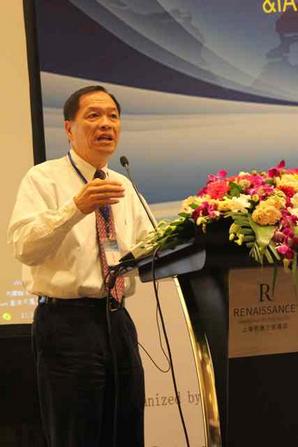
Image By: Rebecca Kanthor
Du Cao, research executive at Chinese car maker Chang'An.
Cytec Industries Inc. said car makers in North America and Europe have very systematic development processes that make it easier to understand their plans, said Hong Fang, the Shanghai-based general manager of industrial materials for Asia for Cytec.
They don’t get that kind of information in China, he said: “As a materials maker we are confused by the Chinese market.”
Germany’s SGL Carbon AG, which is partly-owned by BMW and helped the company develop its CFRP components, said China’s car market for CFRP is not well developed. SGL is still looking for a target project in China, and said the country needs time to accumulate knowledge, a company manager said.
“It’s step-by-step and it needs, in my opinion, 10 years,” said Oscar Yang, the Shanghai-based sales manager of carbon fibers and composite materials for SGL.
Some foreign attendees said they don’t see the kind of specific CFRP and light-weighting plans from Chinese car makers they would expect, given global industry pressures to reduce emissions.
The forum heard that some Chinese car makers are working on CFRP projects. Great Wall Motor Co. Ltd., for example, said its working on three CFRP sample parts, including an engine hood and battery case.
Guangzhou Auto said it’s very interested in the technology and faces tougher government requirements. China’s car industry has made enormous progress in the last 20 years, but lags in light-weighting, said Jing Xiao, chief engineer with Guangzhou Automobile Group’s Automotive Engineering Institute.
China needs more links between university research labs and car makers, as other countries have, he said.
One goal of building closer links between car makers in China will be to present a stronger case for government support, said Chang’An’s Cao.
“We want to get all the OEMs together to influence the government policies and get more government funding… to improve on these big challenges,” he said. |